
Live Educational Webinar | Thursdays at 7PM EST

Advance Your Clinical Education in Peptide Therapy and Earn Accredited Continuing Education Credits

An accredited continuing education course designed to teach clinicians how to understand peptide therapy from a physiological and clinical perspective so they can approach it responsibly and confidently — grounded in mechanisms of action, safety considerations, and real-world clinical context.

Eligible for accredited continuing education credits across multiple healthcare professions, including physicians, nurse practitioners, physician assistants, registered nurses, dietitians, pharmacists, and more.*

Don’t have time to attend the webinar?

Enroll now to begin the accredited CME course immediately.

Webinar attendees will receive a special attendee discount (33% off) during the session.

Most Clinicians Were Never Formally Taught Peptide Therapy — Yet It’s Already Showing Up in Clinical Conversations

If you are an MD or DO, you likely never received structured education on peptide signaling, receptor interaction, or clinical integration during medical training.

Yet today:

Patients are asking about peptide therapy
Clinics are offering it
Colleagues are discussing it
Investigational peptides are increasingly visible in practice

This creates uncertainty.

Not because you lack intelligence,

but because there is a gap in formal medical education.

This webinar was created to address that gap through accredited clinical education grounded in physiology and professional responsibility.

What You’ll Learn in This Live Educational Webinar

01

Why Most Available Peptide Education Leaves Clinicians Without a Physiological Foundation

We’ll discuss why protocol-first training is insufficient and how understanding mechanisms of action, peptide signaling, and metabolic and cellular physiology changes the way you evaluate integration into practice.

02

How to Approach Peptide Therapy From a Clinical Decision-Making Perspective

You’ll learn how to think through:

Mechanisms of action
Receptor signaling pathways
Age-related physiological decline
Delivery considerations
Safety considerations
Regulatory awareness
Compassionate use context
Scope of practice and professional responsibility

This is structured education for responsible clinical understanding, not shortcuts.

03

How to Earn 5 AMA PRA Category 1 Credits™ Through Accredited CME

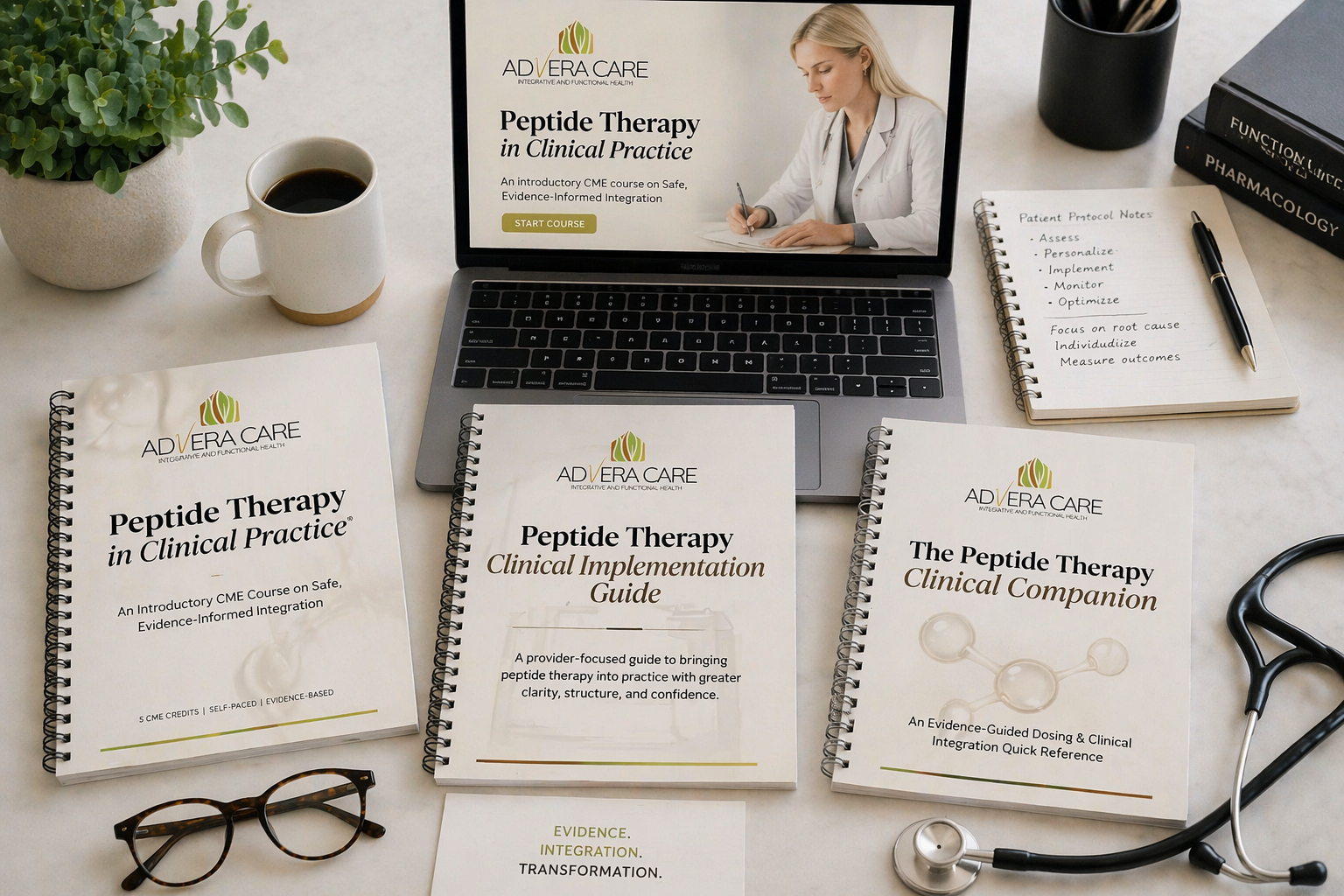
You’ll see exactly how the full course, Peptide Therapy in Clinical Practice, is structured:

Accredited CME through joint providership with iiCME
Self-paced (~5 hours)
Includes post-course assessment
Earn 5 AMA PRA Category 1 Credits™ (for physicians)
Certificate of Participation for other licensed providers
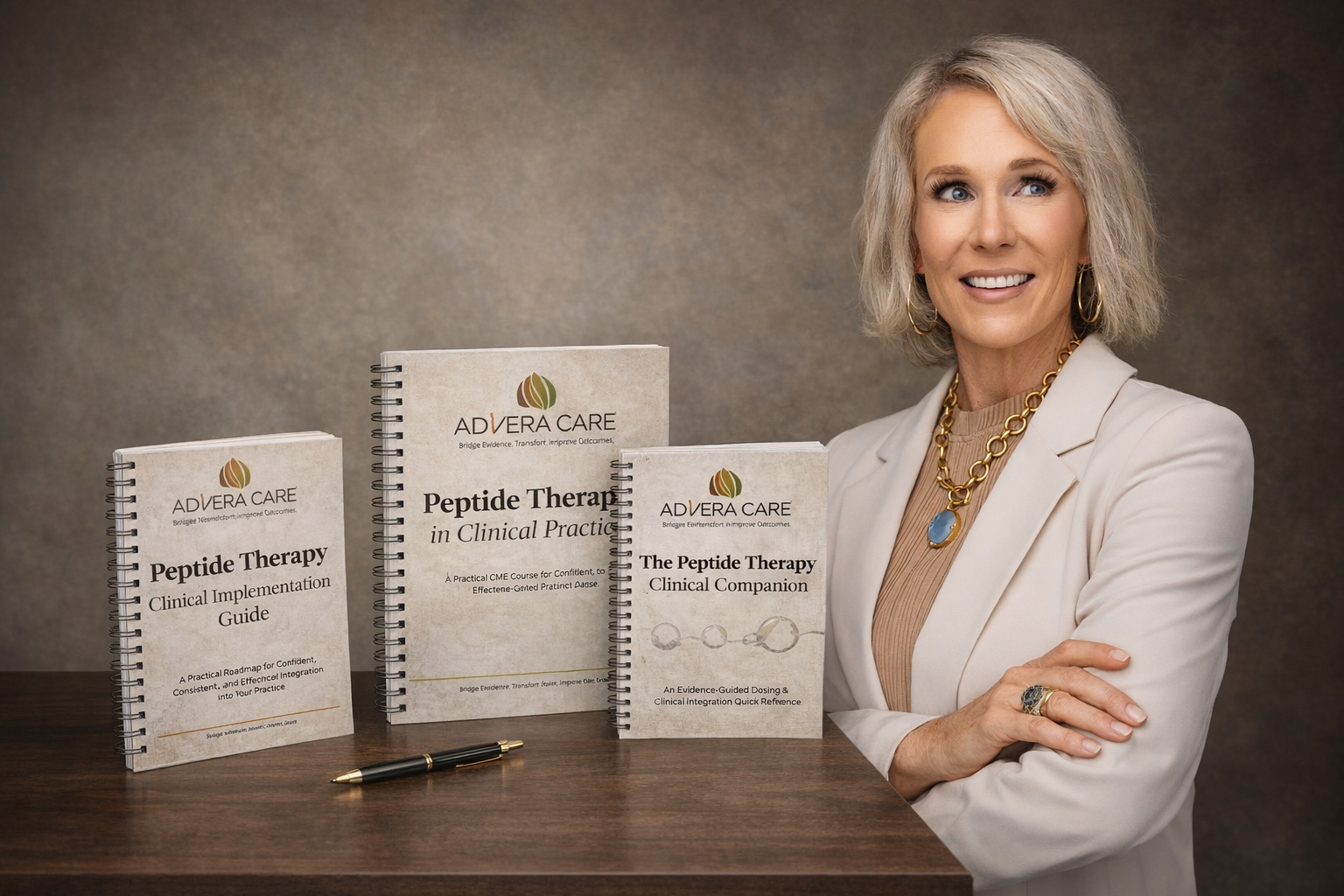
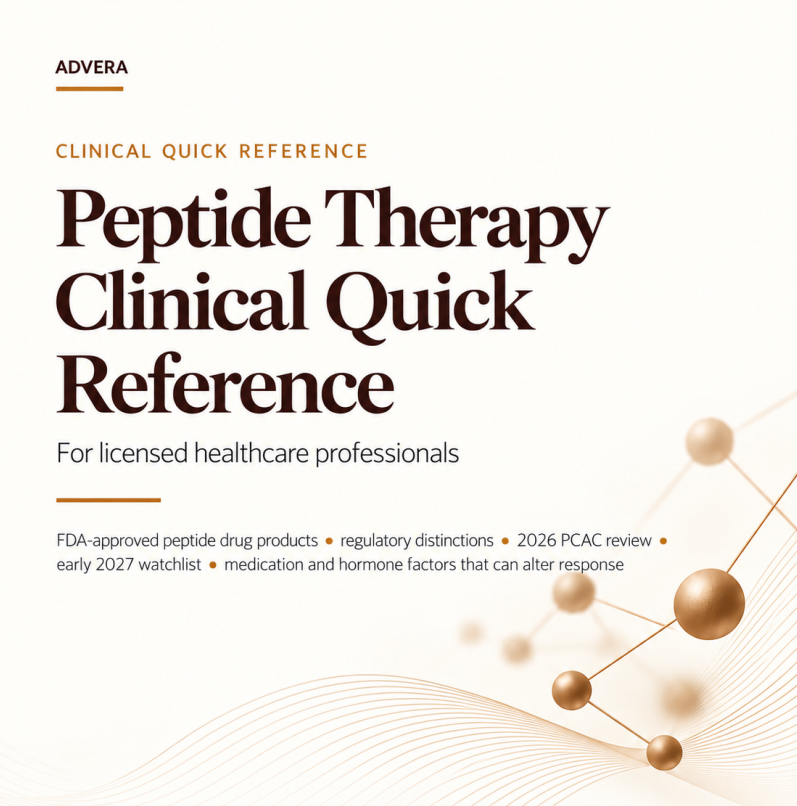
Includes the 40-page Clinical Companion reference guide

Designed specifically for licensed clinicians and healthcare providers.

Accreditation:

This course is accredited for registered nurses, nurse practitioners, physician assistants, dietitians, pharmacists, and interprofessional continuing education participants.

Click here to view the official accreditation statement and claim credit: https://akhcme.com/content/peptide-therapy-clinical-practice

This course is separately accredited for physicians (MD/DO) for 5 AMA PRA Category 1 Credits™ through IICME.

This is an accredited CME course designed to teach clinicians how to understand peptide therapy from a physiological and clinical perspective so they can approach it responsibly and confidently.

  • Not trends.

  • Not marketing.

  • Not guesswork.

Structured clinical education.

What Makes This Different

Most available information is fragmented:

  • Forums

  • Podcasts

  • Social media summaries

  • Dosing sheets without full context

  • Research papers without clinical translation

This course teaches peptide therapy from the physiology level first — including mechanisms of action, receptor interaction, metabolic signaling, and safety considerations — before discussing clinical integration.

When you understand physiology, clinical decision-making becomes clearer.

You move from uncertainty to structure.

Includes the Clinical Implementation Guide

A structured reference to help you think through common next-step considerations such as legal context, sourcing, and practice integration.

About

Lauren Supra, RN, BC-FMP

Founder, Advera Care

Lauren Supra is a Registered Nurse and Board-Certified Functional Medicine Practitioner (BC-FMP), and the founder of Advera Care, a functional medicine and peptide therapy education company focused on accredited clinical training.

Her work in hospice nursing deeply shaped her perspective on physiology, metabolic dysfunction, and the importance of understanding root causes long before advanced decline occurs. Over time, she recognized a significant educational gap in peptide therapy — an area increasingly present in clinical conversations but rarely covered in medical training.

She created Peptide Therapy in Clinical Practice, an accredited Continuing Medical Education course, to provide licensed clinicians with structured education grounded in mechanisms of action, peptide signaling, safety considerations, and responsible integration into practice.

Lauren is also currently advancing her clinical training as a Family Nurse Practitioner candidate and continues to focus her work on physiology-based education for clinicians who value clarity, responsibility, and professional growth.

What You’ll Walk Away With

After attending the webinar, you will:

  • Understand why physiology-first education matters

  • See how structured clinical training reduces uncertainty

  • Know how to earn accredited CME credits

  • Learn how the Clinical Companion supports real-world integration

  • Understand how to approach peptide therapy responsibly and confidently

If you’ve been meaning to strengthen your understanding but haven’t found a responsible, accredited place to start, this is it.

Join Us Live

Thursdays at 7PM EST

©2026 Advera Care. All Rights Reserved.